Concord Eviction Rules Could Change Under New State Proposal
What Concord Property Owners Need to Know About Potential Eviction Delays in 2026
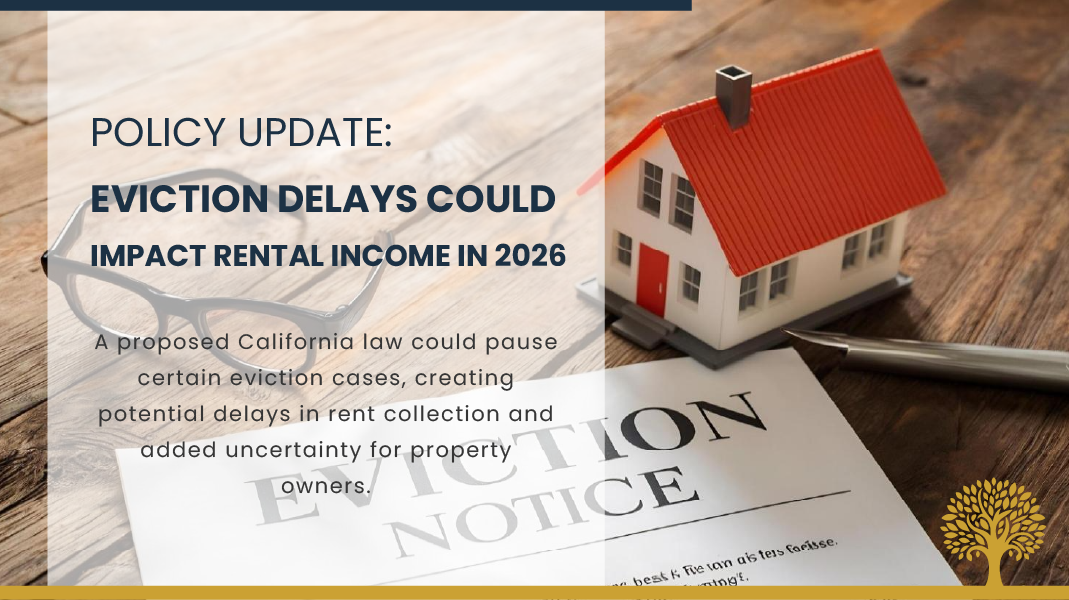
A new California proposal could significantly affect how and when rental housing providers are able to pursue eviction actions tied to nonpayment of rent. If enacted, the measure would introduce temporary restrictions on certain eviction cases, potentially delaying enforcement timelines for months.
For property owners in Concord, where consistent rental income is critical to covering operating expenses, this proposal highlights a growing trend: expanded tenant protections that may shift financial risk onto housing providers.
What the Proposed Law Would Do
The proposal would pause eviction actions in cases where a tenant’s loss of income is connected to specific external enforcement-related circumstances.
Key provisions include:
Eviction proceedings could be delayed during qualifying hardship periods
Additional waiting time could apply after those conditions end
Courts may be required to pause active eviction cases under certain conditions
Property owners could be restricted from charging late fees or penalties tied to the affected nonpayment
To qualify, tenants would need to provide a formal declaration confirming hardship.
Why This Creates Operational Challenges
While the proposal is designed to address specific tenant hardships, it introduces several challenges for rental property owners:
Extended periods without rental income
Limited ability to enforce lease terms during the delay
Ongoing responsibility for mortgage, taxes, insurance, and maintenance costs
Uncertainty around how long enforcement timelines may extend
For many property owners—especially those with small portfolios—these delays can directly impact financial stability.
Verification and Compliance Complexity
Another key consideration is how these hardship claims would be verified and administered.
The proposal introduces:
Formal documentation requirements from tenants
Legal obligations for courts to respond to qualifying claims
Reduced flexibility for housing providers during enforcement
This creates a more complex process where timing, documentation, and compliance procedures become critical.
Why This Matters in Concord’s Rental Market
Concord continues to experience strong rental demand, but like many Northern California markets, it also operates within a highly regulated legal environment.
In this context:
Cash flow consistency is essential
Delays in enforcement can compound financial pressure
Regulatory shifts can affect both short-term operations and long-term strategy
Even proposals that are not yet law can influence how property owners prepare and manage risk.
How This Applies Across Northern California
While this discussion focuses on Concord, the same proposal would impact rental housing providers across:
Sacramento
Roseville
Fairfield
Because these are statewide policy considerations, any changes would apply uniformly across all California rental markets.
Owners with properties in multiple cities should ensure consistent compliance strategies and risk planning across their portfolios.
Best Practices for Property Owners Moving Forward
To stay prepared in an evolving regulatory environment, property owners should:
Maintain clear and well-documented lease agreements
Monitor changes in eviction-related regulations
Keep detailed records of rent payments and tenant communication
Plan for potential cash flow interruptions
Work with professional management to navigate compliance requirements
Proactive planning is essential when enforcement timelines may become less predictable.
The Bottom Line for Concord Property Owners
Proposals that affect eviction timelines are not just legal updates—they are financial considerations that directly impact rental property performance.
While this measure is still under consideration, it reflects a broader shift toward policies that can extend tenant protections while increasing operational complexity for property owners.
Staying informed and prepared is the best way to protect both compliance and cash flow.
At Legacy Property Management, we monitor regulatory changes closely and adjust strategies to protect our clients’ investments.
Our homeowners don’t need to worry—we have them covered.