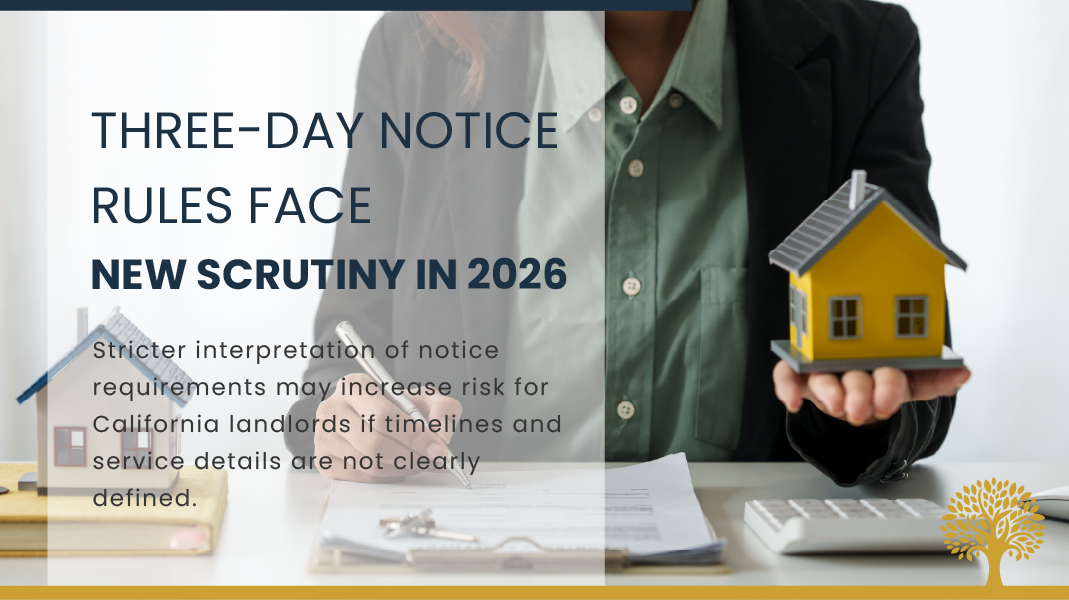
Concord Three-Day Notice Rules Face New Legal Scrutiny in 2026
What Concord Rental Property Owners Need to Know About Notice Compliance
California eviction procedures may be facing increased legal scrutiny following a recent appellate court interpretation that could impact how three-day notices are written and enforced.
For rental property owners in Concord, this development highlights an important reality: even small technical errors in notices can delay or invalidate eviction proceedings.
While the broader legal outcome is still evolving, the practical takeaway is immediate—precision in notice language matters more than ever.
Why Three-Day Notices Are Under Review
Recent court interpretation has emphasized that eviction notices must be written in a way that an “ordinary tenant” can clearly understand.
This includes clarity around:
The service date of the notice
When the three-day period begins
When the deadline expires
If a notice fails to clearly communicate these elements, it may not meet legal standards—even if the underlying reason for the notice is valid.
Why This Matters for Concord Landlords
In a market like Concord, where rental demand remains strong but regulations are strict, eviction delays can quickly become costly.
A defective notice can lead to:
Dismissed eviction filings
Restarting the legal process
Additional lost rental income
Increased legal exposure
This is not about major violations—it often comes down to formatting, wording, and timing details.
Compliance Standards Are Becoming More Technical
California’s unlawful detainer process has always required strict compliance, but recent developments reinforce that courts are closely evaluating how notices are written—not just why they are issued.
This applies to:
Nonpayment of rent notices
Lease violation notices
Other three-day compliance notices
Even experienced landlords using older templates may now face increased risk if those documents do not meet current expectations for clarity.
Key Areas That Require Attention
To reduce risk, rental property owners in Concord should ensure their notices clearly define:
The exact date the notice was served
The start and end date of the notice period
Proper exclusion of weekends and judicial holidays, when applicable
These details must be presented in a way that is easy to understand—not assumed.
Operational Impact for Rental Property Owners
This shift is less about changing the law and more about how strictly it is interpreted and enforced.
For property owners, that means:
Greater need for standardized processes
Less margin for error in documentation
Increased importance of up-to-date notice templates
Inconsistent or outdated practices can create delays that directly impact cash flow and property performance.
How This Applies Across Northern California
While this discussion focuses on Concord, the same compliance expectations apply across:
Sacramento
Roseville
Fairfield
California housing law is applied statewide, meaning any shift in legal interpretation can impact rental operations across all markets.
Owners managing multiple properties or cities must ensure consistency in how notices are prepared and delivered.
Best Practices Moving Forward
To stay protected in 2026 and beyond, rental property owners should:
Review and update all three-day notice templates
Ensure notices clearly define timelines and service details
Avoid relying on outdated or self-drafted forms
Maintain consistent documentation practices
Monitor ongoing legal developments affecting eviction procedures
The goal is simple: eliminate ambiguity before it becomes a legal issue.
The Bottom Line for Concord Property Owners
Three-day notices remain one of the most critical steps in the eviction process—and one of the easiest places for errors to occur.
In a regulated market like Concord, small mistakes can lead to major delays. Clear, compliant documentation is no longer optional—it’s essential for protecting rental income and maintaining operational efficiency.
At Legacy Property Management, our eviction rate remains below 1%, driven by proactive screening, strong tenant relationships, and consistent compliance practices.
Our homeowners don’t need to worry—we have them covered.