
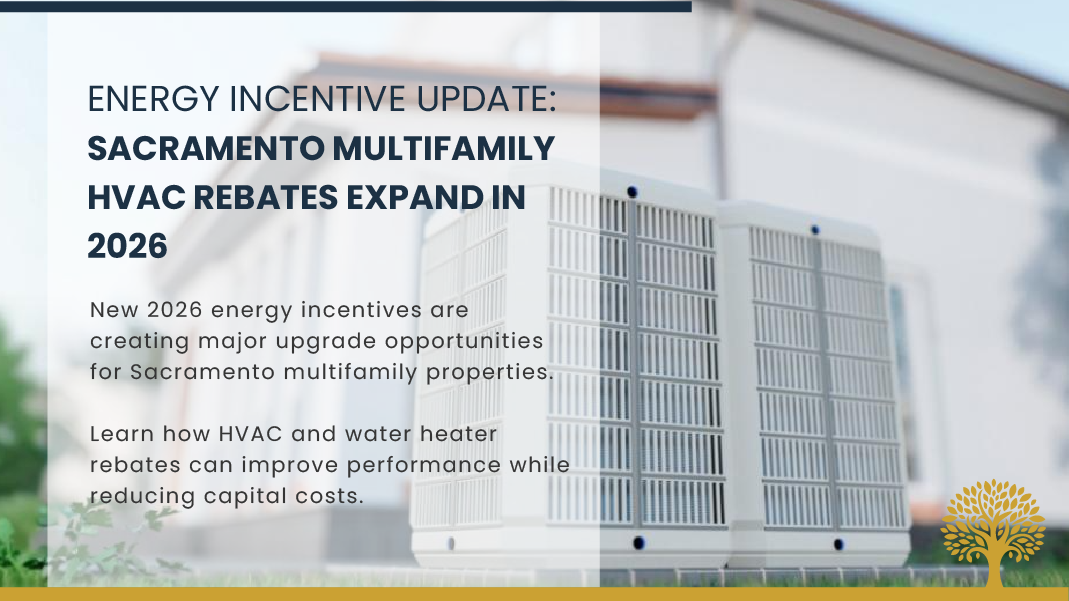
Sacramento Energy Upgrade Update: Major Incentives Available for Multifamily Properties
What Sacramento Housing Providers Need to Know in 2026
Energy efficiency and electrification are becoming central priorities in California rental housing, and 2026 is bringing meaningful financial opportunities for multifamily property owners in Sacramento. New incentive increases at the local utility level are making HVAC and water heater upgrades significantly more affordable for owners who operate apartment communities and other multifamily rental assets.
For Sacramento landlords focused on long-term asset performance, compliance, and operating cost control, these incentives represent a strategic opportunity—not just a sustainability initiative.
What Has Changed in 2026
In early 2026, incentive funding for multifamily energy upgrades in the Sacramento region was expanded substantially. The updated structure increases rebate amounts for qualifying heating, cooling, and water heating equipment, particularly systems that support electrification and higher efficiency standards.
The most notable change is the scale of funding now available per property, with qualifying projects able to access incentives totaling up to $350,000 per site, subject to eligibility and program conditions.
Eligible Upgrade Categories
Sacramento multifamily properties may now qualify for higher incentives in several key upgrade areas:
Inverter-driven split-system HVAC equipment
Heat pump water heaters serving individual units
Central heat pump water heating systems serving multiple units
These systems are designed to reduce energy consumption, improve performance, and support California’s long-term electrification goals while helping owners modernize aging infrastructure.
Why This Matters for Sacramento Property Owners
Sacramento’s rental market includes a large concentration of older multifamily buildings where HVAC and water heating systems represent major operating expenses. Rising utility costs, evolving efficiency expectations, and increasing tenant demand for modern systems make upgrades more than just optional improvements.
With enhanced incentives now available, owners can:
Offset capital costs for major mechanical replacements
Improve long-term net operating income
Reduce maintenance and emergency repair exposure
Increase asset competitiveness in the Sacramento rental market
Prepare properties for future regulatory requirements
For many owners, these incentives change the financial math of upgrades that may have previously been deferred.
Why California Law Still Drives the Bigger Picture
While these incentives are utility-driven rather than legislative, they align with broader California housing and energy policies that continue to prioritize efficiency, electrification, and emissions reduction.
Importantly, these incentives do not replace or override California housing law. Owners must still ensure that any upgrade work complies with:
California habitability requirements
Local permitting and inspection rules
Tenant notice and access standards
Fair housing and reasonable accommodation obligations
Professional coordination remains critical to ensure upgrades improve properties without creating compliance risk.
Local Market Impact in Sacramento
Sacramento is particularly well-positioned to benefit from expanded multifamily incentives due to:
A high volume of legacy apartment stock
Strong demand for well-maintained rental housing
Increasing pressure to control operating expenses
Growing focus on professional property management standards
Owners who act early may find greater access to funding before incentive allocations are fully committed.
How This Applies to Other Northern California Cities
Although this update is Sacramento-focused, similar energy efficiency trends are shaping multifamily operations across Northern California, including Fairfield, Roseville, and Concord.
While incentive structures vary by region, the underlying strategy remains consistent statewide: California continues to reward proactive owners who invest in efficient, well-managed rental housing.
Best Practices Before Moving Forward
Sacramento multifamily owners considering upgrades should:
Evaluate current HVAC and water heating system age and performance
Confirm eligibility before committing to replacements
Coordinate upgrades with tenant communication requirements
Document improvements for long-term asset planning
Work with management teams experienced in California compliance
Energy incentives are most effective when paired with structured project planning and professional oversight.
The Bottom Line for Sacramento Multifamily Owners
Expanded incentives in 2026 create a rare opportunity for Sacramento property owners to modernize multifamily assets while significantly reducing upfront costs. For owners thinking strategically about long-term performance, tenant satisfaction, and operational efficiency, this is a moment worth serious consideration.
As always, success depends not just on accessing incentives—but on executing upgrades in a way that aligns with California housing law and professional property management standards.