
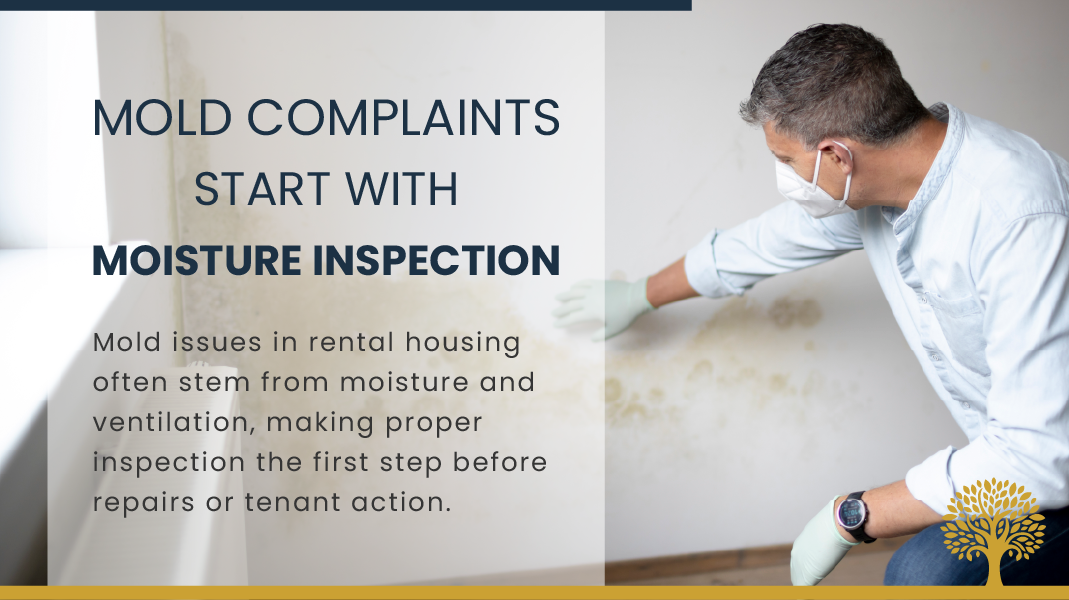
Sacramento Mold Complaints: What Landlords Should Do First
What Sacramento Property Owners Need to Know About Mold, Moisture, and Tenant Responsibility
Mold complaints are one of the most common—and often misunderstood—maintenance issues in rental housing. For property owners in Sacramento, knowing how to respond correctly is critical, not just for protecting the property, but also for staying aligned with California habitability standards.
When a tenant reports mold, the instinct may be to act quickly with repairs or assign responsibility. However, the most important first step is identifying the source of the moisture.
Why Mold Complaints Require a Structured Response
Mold does not develop without moisture. Whether it appears in a bathroom, closet, or other enclosed area, the root cause is always tied to humidity, ventilation, or water intrusion.
In Sacramento rental properties, common contributing factors include:
Poor ventilation in bathrooms
Lack of window use or airflow
High indoor humidity
Minor condensation in enclosed spaces
Without confirming the source, taking immediate corrective action can lead to misdiagnosis, unnecessary repairs, or recurring issues.
Start With a Moisture Inspection—Not Assumptions
Before making repairs or assigning responsibility, property owners should have the unit evaluated by a qualified moisture or water intrusion inspector.
A proper inspection typically includes:
Moisture meter readings
Infrared imaging to detect hidden moisture
Evaluation without opening walls or ceilings
This approach provides an objective understanding of the issue and helps determine whether the cause is structural, environmental, or behavioral.
It is also recommended to use an independent inspector—not one who will perform the remediation work—to ensure an unbiased assessment.
Understanding California Habitability Standards
California habitability standards address mold, but with specific limitations. The focus is generally on:
Visible mold growth
Conditions confirmed by a qualified authority
Issues that go beyond minor surface-level moisture buildup
Importantly, not all mold situations automatically qualify as a habitability violation. Small amounts of mold that occur in areas designed to handle moisture—such as bathrooms—may not fall under the same requirements if they result from normal use conditions.
Why Air Testing Is Not the First Step
Many property owners consider mold air testing as an initial step. However, guidance from state health authorities does not recommend routine air testing for mold.
Instead, the priority should be identifying:
The presence of moisture
The source of that moisture
Whether the condition is ongoing or isolated
Addressing the cause is more effective than focusing on airborne measurements.
When Tenant Behavior Becomes a Factor
In some cases, mold issues may be linked to how the property is being used.
Examples include:
Not using bathroom exhaust fans
Keeping windows closed in high-humidity conditions
Blocking airflow in enclosed areas
If an inspection confirms that tenant behavior is contributing to the issue, it may be addressed as a lease compliance matter.
However, this determination should always be made after confirming the source of the problem, not before.
Why Acting Too Quickly Can Create Risk
Attempting to fix mold issues without proper evaluation can lead to:
Repeated maintenance costs
Incomplete repairs
Disputes with tenants
Increased legal exposure
A structured, documented approach protects both the property and the owner.
How This Applies Across Northern California
While this example focuses on Sacramento, the same principles apply in:
Concord
Roseville
Fairfield
All of these markets experience similar rental housing conditions, where ventilation, tenant behavior, and property design can influence moisture levels.
A consistent response process is essential across all properties.
Best Practices for Handling Mold Complaints
To manage mold issues effectively, Sacramento property owners should:
Start with a professional moisture inspection
Identify the source before making repairs
Avoid assumptions about tenant responsibility
Document all findings and communication
Address any habitability concerns promptly
Resolve tenant-related issues after the root cause is confirmed
This approach reduces risk and ensures compliance with California standards.
The Bottom Line for Sacramento Property Owners
Mold complaints are not just maintenance issues—they are compliance-sensitive situations that require careful handling.
The key is simple: inspect first, act second.
By identifying the true source of moisture and following a structured process, property owners can resolve issues efficiently while protecting their investment.
At Legacy Property Management, we handle these situations with a proactive, compliance-first approach—helping prevent escalation and ensuring properties are properly maintained.
Our homeowners don’t need to worry—we have them covered.