
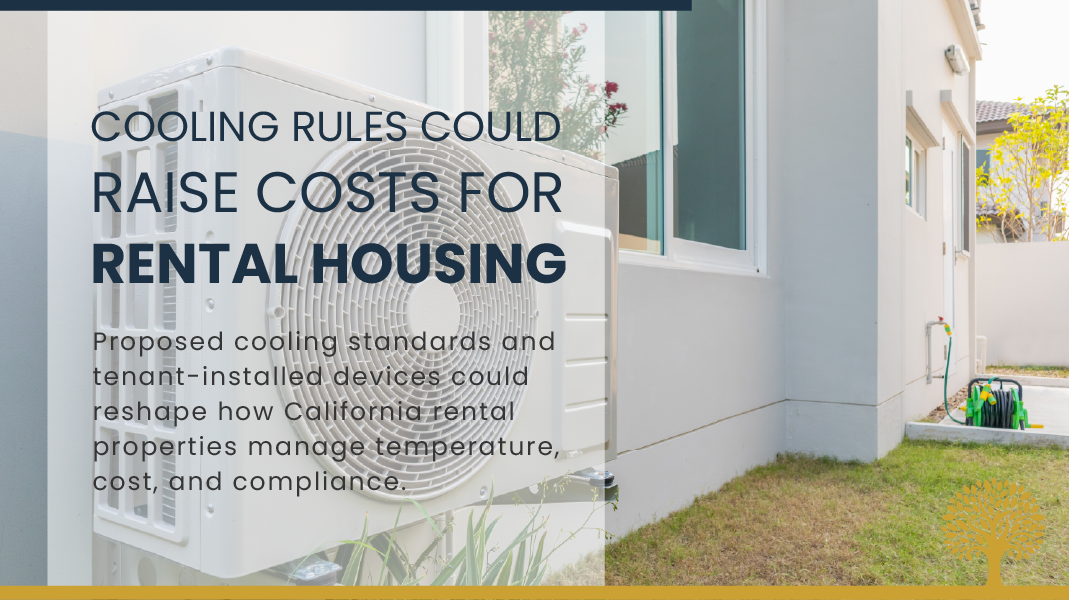
Fairfield, California Cooling Rules Proposal Could Impact Rental Property Costs
What Fairfield Property Owners Need to Know About Potential 82-Degree Housing Standards
A new California proposal is bringing increased attention to how rental properties handle indoor temperatures, especially during extreme heat. If passed, the measure would introduce new expectations around cooling access and temperature limits, potentially adding both cost and compliance responsibilities for housing providers.
For property owners in Fairfield, where summer temperatures regularly rise, this proposal signals a broader shift in how habitability standards may evolve in the coming years.
What the Proposed Cooling Requirements Include
The proposed legislation would allow tenants to install portable cooling devices in their rental units, while also introducing a requirement for properties to maintain an indoor temperature standard of 82 degrees.
Key elements of the proposal include:
Tenants may install portable cooling equipment at their own expense
The rules would apply to leases starting or renewing on or after January 1, 2028
Rental properties may be required to meet a defined indoor temperature threshold
While tenants would cover the cost of the devices themselves, the broader compliance standard could shift responsibility back to property owners in certain situations.
Why This Creates Uncertainty for Rental Property Owners
One of the primary concerns surrounding the proposal is how responsibility is divided between tenants and landlords.
On one hand:
Tenants would be responsible for purchasing and installing cooling devices
On the other:
Property owners could still be held responsible for meeting temperature standards under housing regulations
This creates a potential gap where equipment is tenant-installed, but performance standards are owner-enforced, increasing operational complexity.
Electrical Capacity and Property Limitations
Another key issue is electrical system capacity.
Many rental properties—especially older homes and multifamily units in Fairfield—were not originally designed to support multiple high-load cooling devices running simultaneously.
Without clear limits, this could lead to:
Overloaded circuits
Increased maintenance issues
Higher risk of system failures
Any future regulation will likely need to address how cooling devices interact with existing electrical infrastructure.
Liability and Property Risk Considerations
Allowing tenant-installed cooling equipment also raises important questions about property damage and liability.
Potential risks include:
Water damage from improperly installed window units
Mold or mildew caused by condensation
Structural wear from installation modifications
Clarifying who is responsible for these risks will be critical if the proposal moves forward.
Why This Matters for Fairfield Rental Housing
Fairfield experiences high seasonal temperatures, making cooling an increasingly important factor in tenant expectations and property performance.
As climate patterns shift, rental housing standards may continue to evolve toward:
Greater emphasis on indoor habitability
Increased regulation around temperature control
Higher expectations for property systems and infrastructure
Even though the proposal is not yet law, it reflects a growing trend that property owners should begin preparing for.
How This Applies Across Northern California
While this discussion focuses on Fairfield, similar conditions exist across:
Sacramento
Roseville
Concord
All of these markets experience periods of high heat, and any statewide change to cooling requirements would apply across all regions.
This means property owners with portfolios in multiple cities should think proactively about long-term property upgrades and compliance planning.
Best Practices for Property Owners Moving Forward
To stay ahead of potential changes, rental property owners should consider:
Evaluating current electrical system capacity
Reviewing lease language related to tenant-installed equipment
Monitoring emerging habitability standards
Planning for future capital improvements related to cooling systems
Maintaining clear documentation of property conditions and upgrades
Being proactive now can help avoid costly adjustments later.
The Bottom Line for Fairfield Property Owners
Cooling requirements are becoming a more visible part of California’s housing conversation. While this proposal is still under consideration, it highlights a shift toward stricter expectations around indoor living conditions and temperature control.
For Fairfield property owners, the key is not reaction—but preparation. Understanding how these changes could impact operations, costs, and compliance will be essential in maintaining long-term rental performance.
At Legacy Property Management, we stay ahead of regulatory changes and help property owners adapt without disruption.
Our homeowners don’t need to worry—we have them covered.